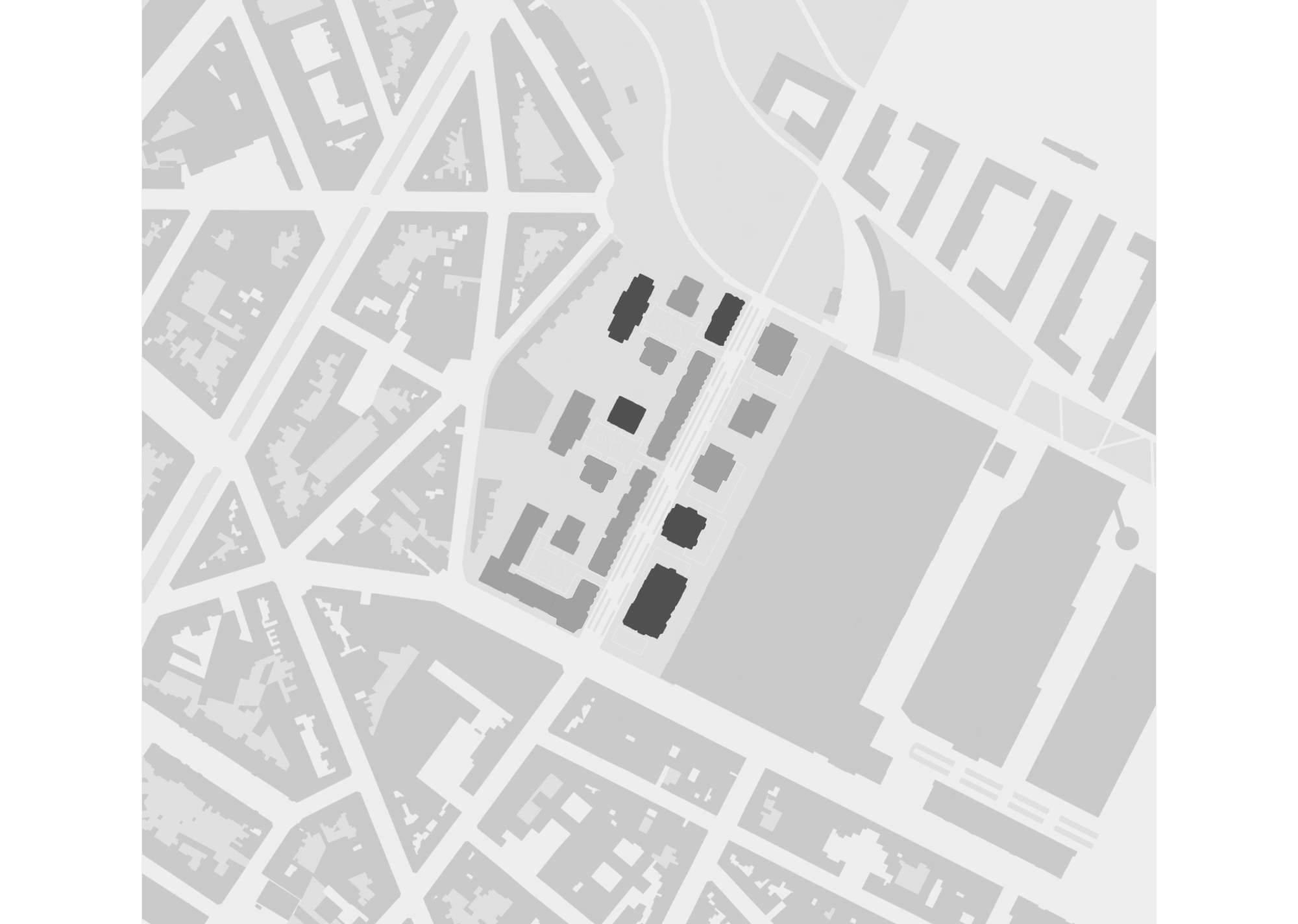
092 Tour&Taxis Brussels - Masterplan
Masterplan design for a new residential quarter on a former railway yard at the Tour&Taxis site
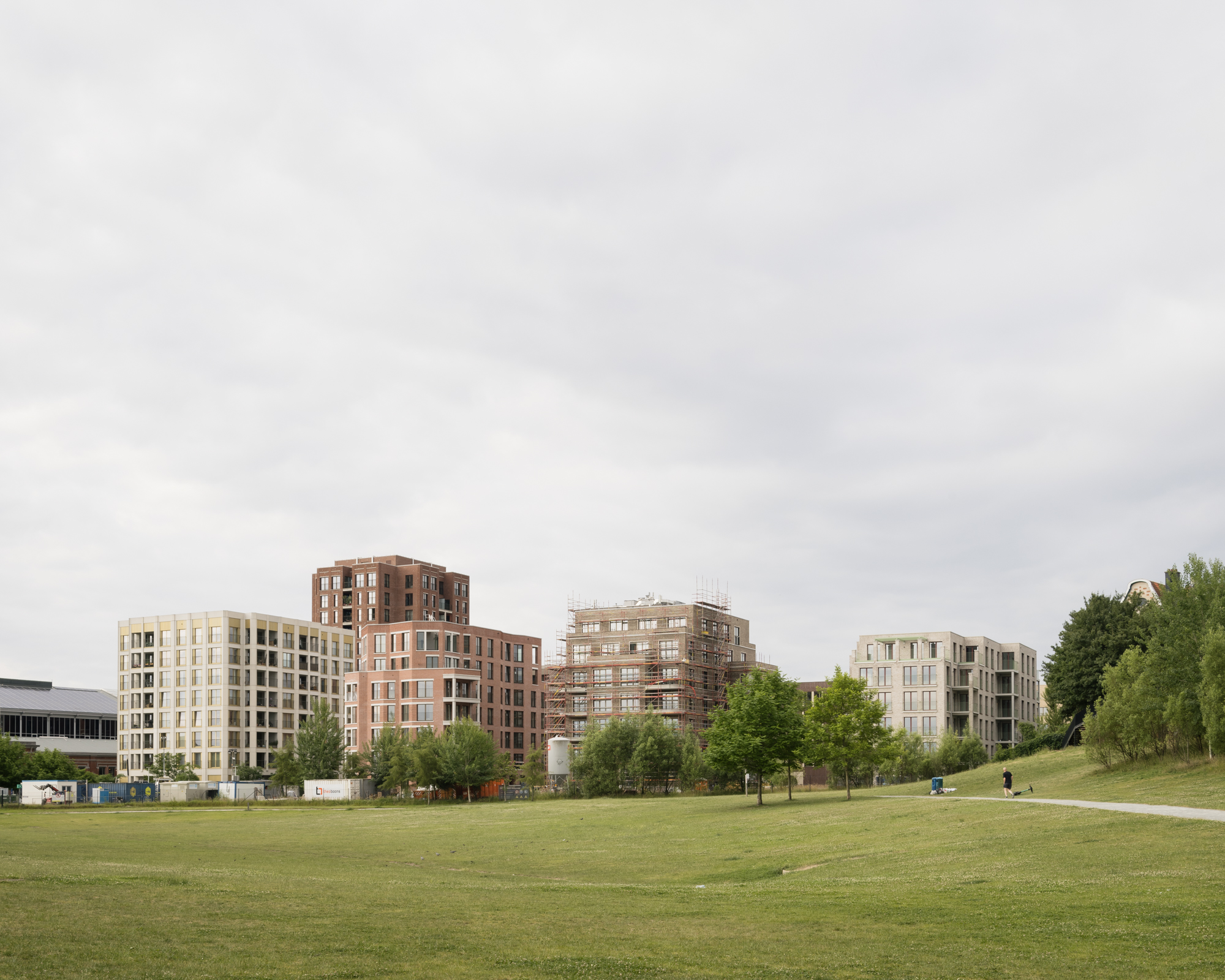
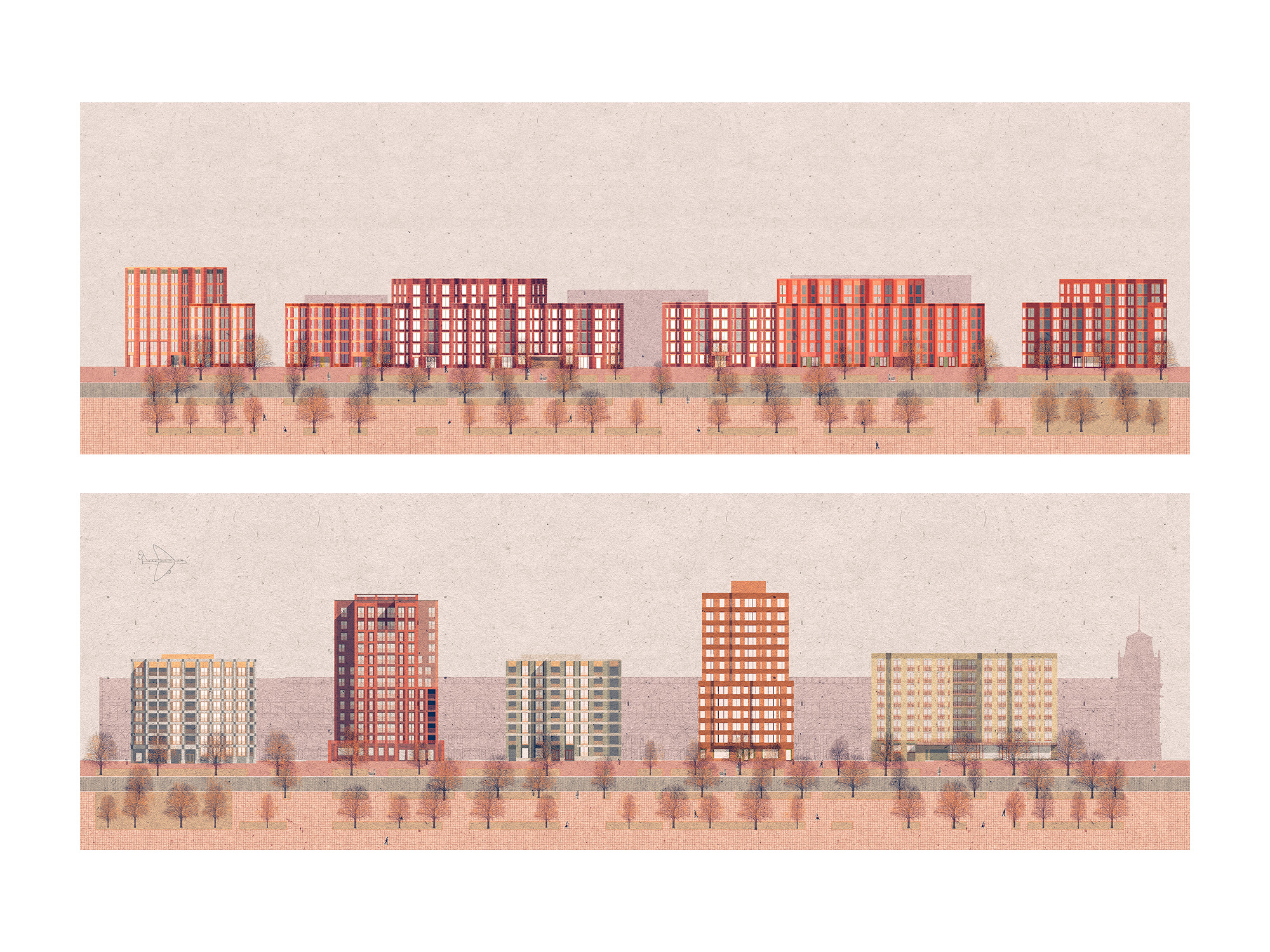
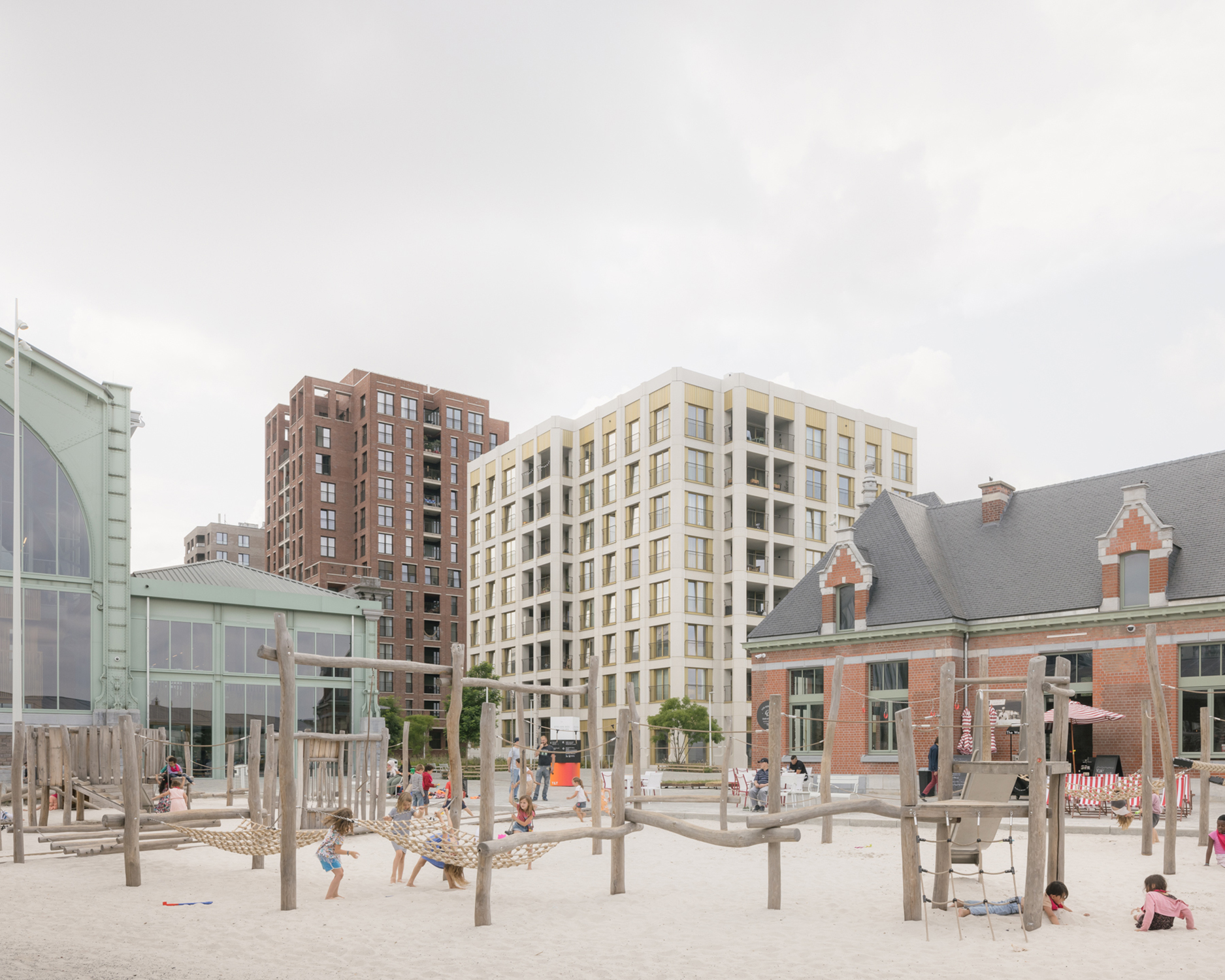
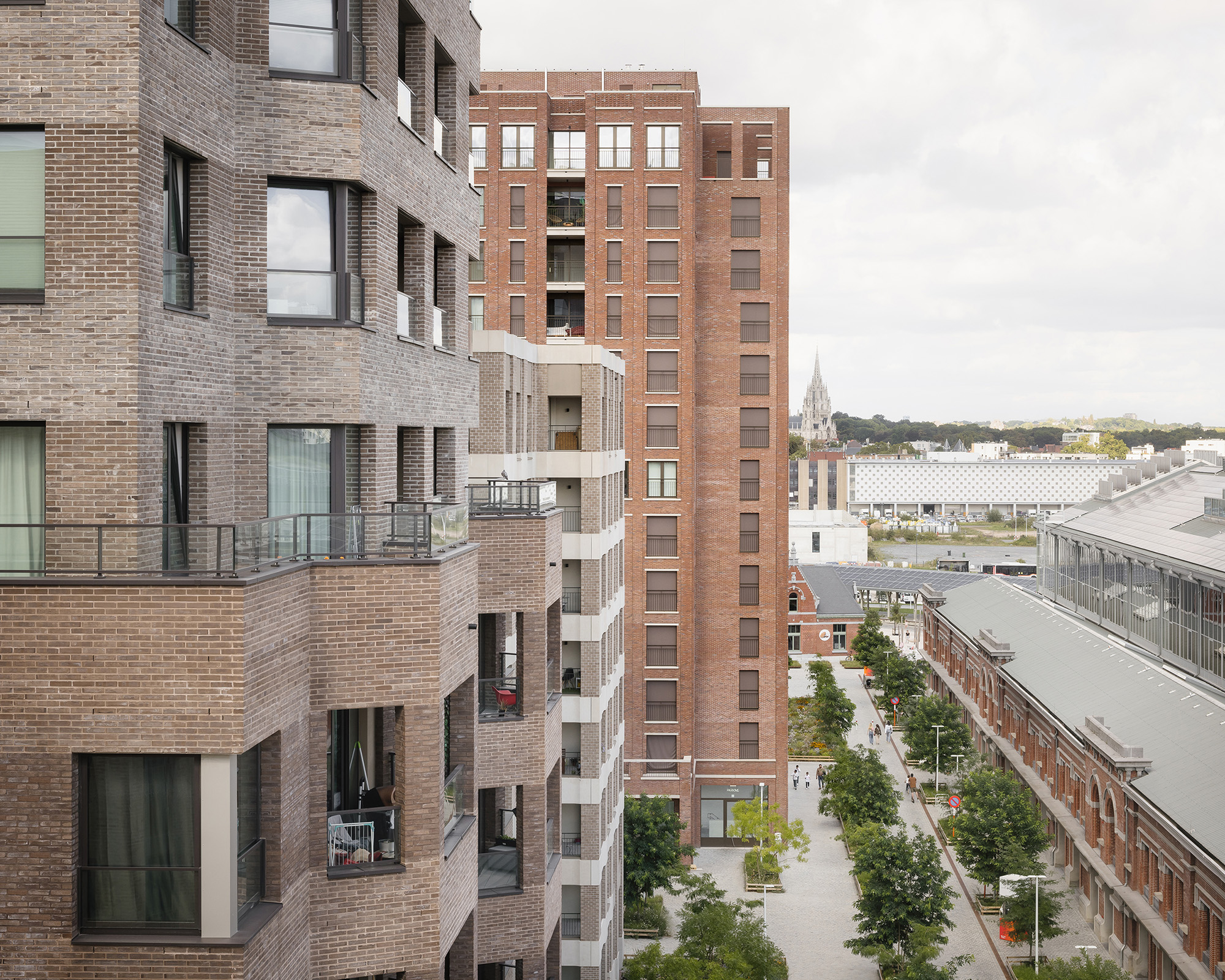
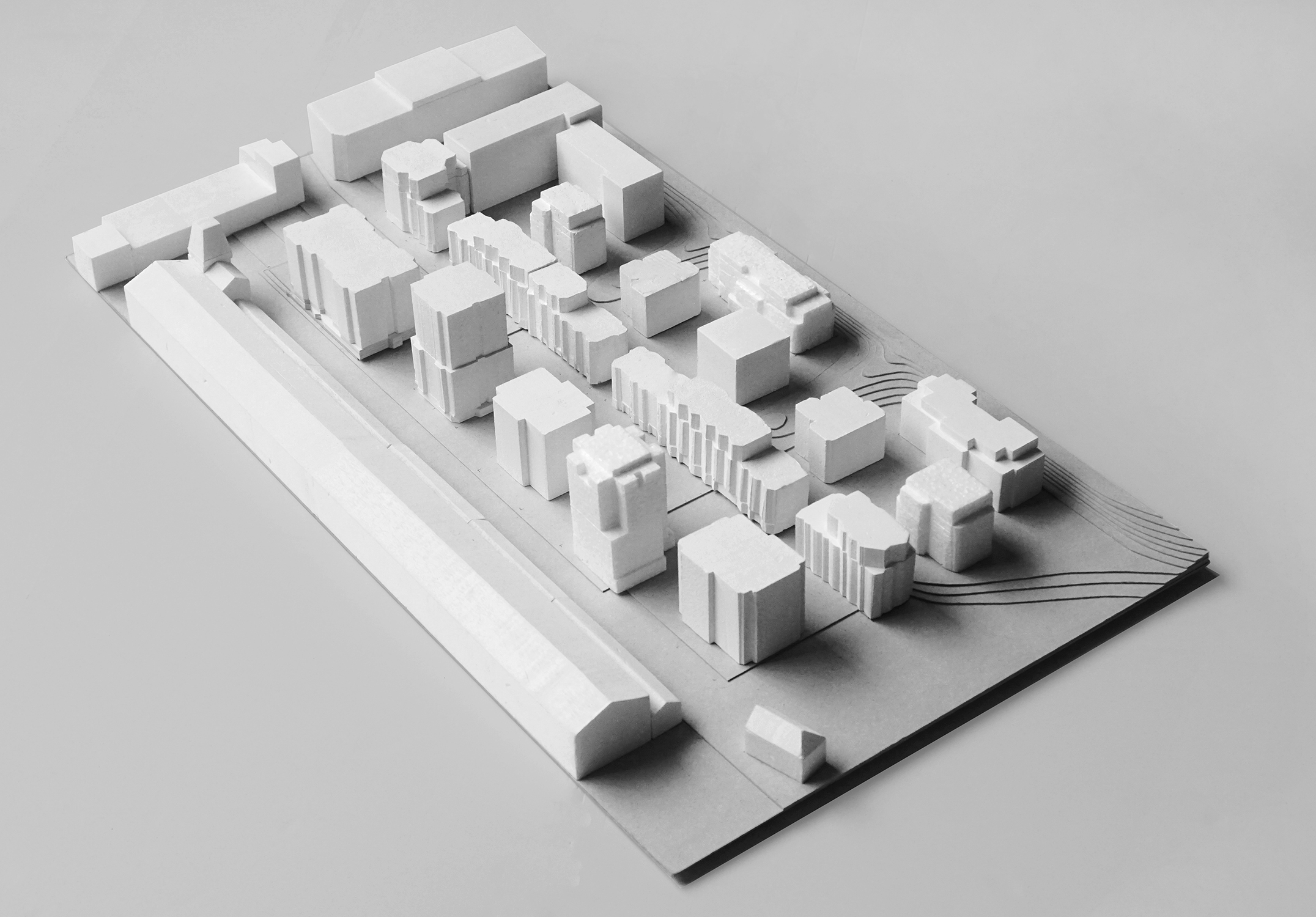
This is a place where many of Brussels’ defining qualities come together and can be experienced at once. Looking outward, we recognize the distinctive roofscape of the Gare Maritime, with its characteristic sequence of rising and falling forms. Beyond it, the city reveals its tallest buildings, while closer by, the surrounding neighbourhoods display their stately architecture. The spacing of the building rows and the varied cornice heights create a rhythmic extension of the Gare Maritime’s façade.
This was once the point where trains curved gracefully into the railway yard. The embankment—shaped by levelling the natural terrain—now guides the eye and invites visitors to wander. Between the buildings, we catch glimpses of the park gradually entering the city.
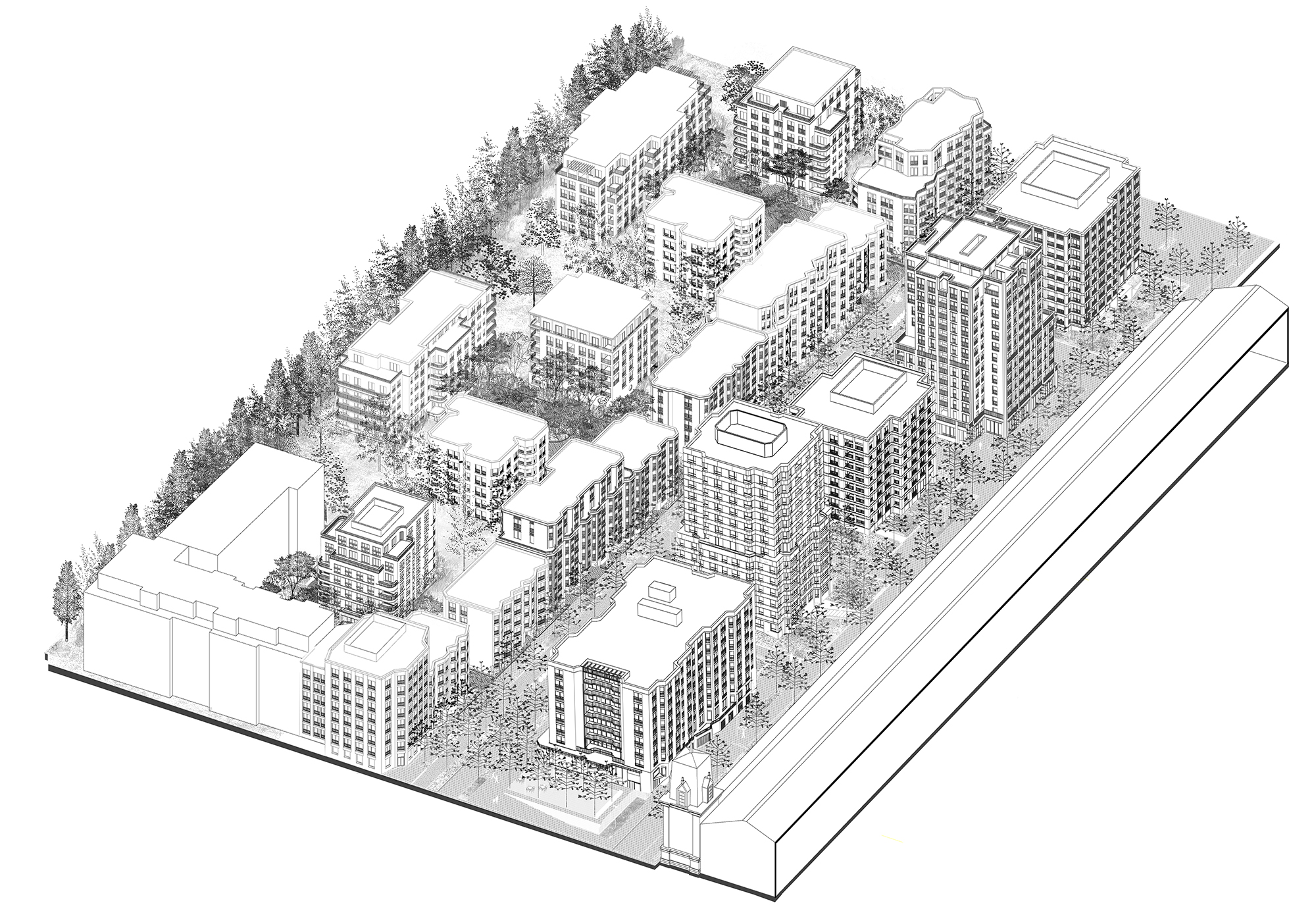
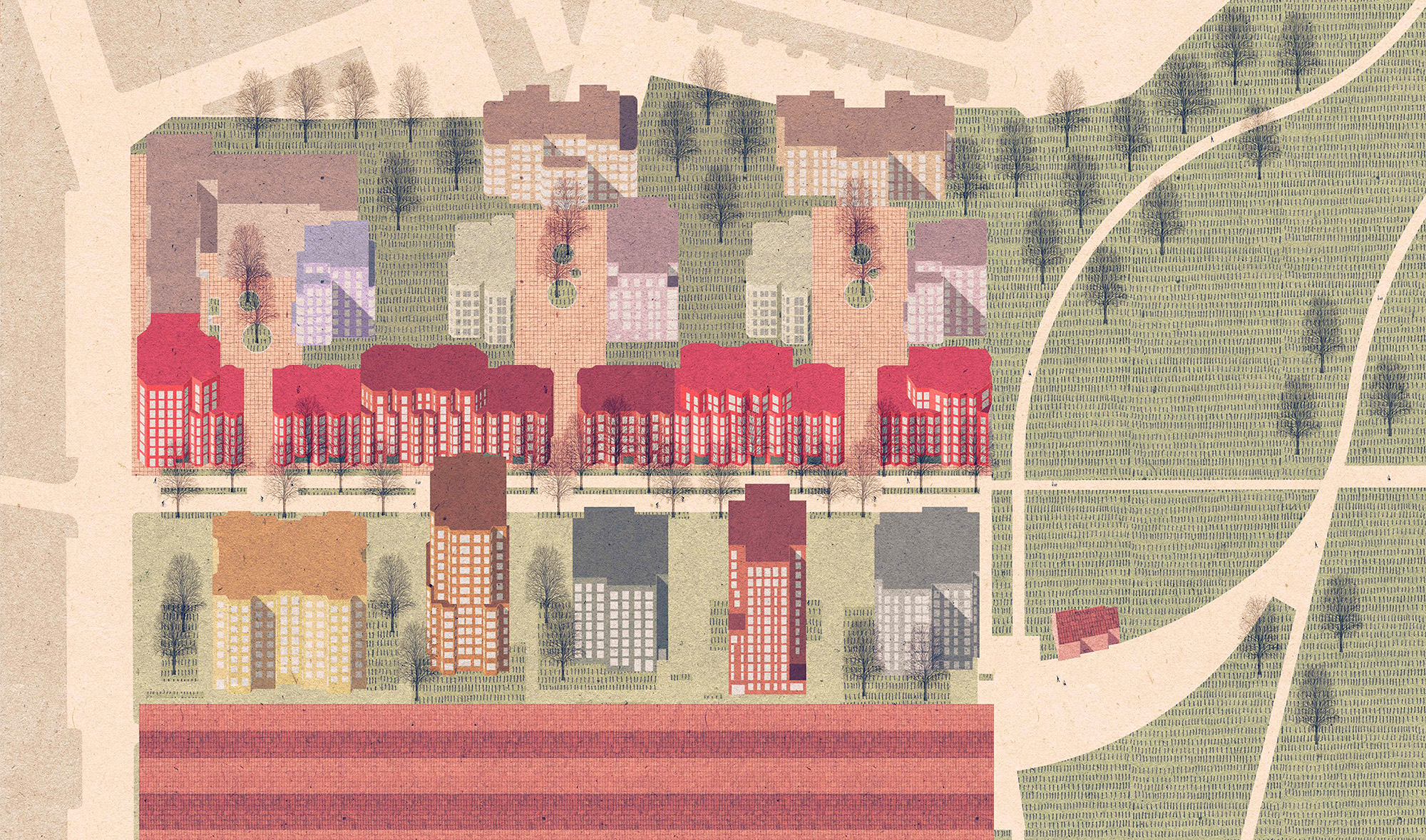
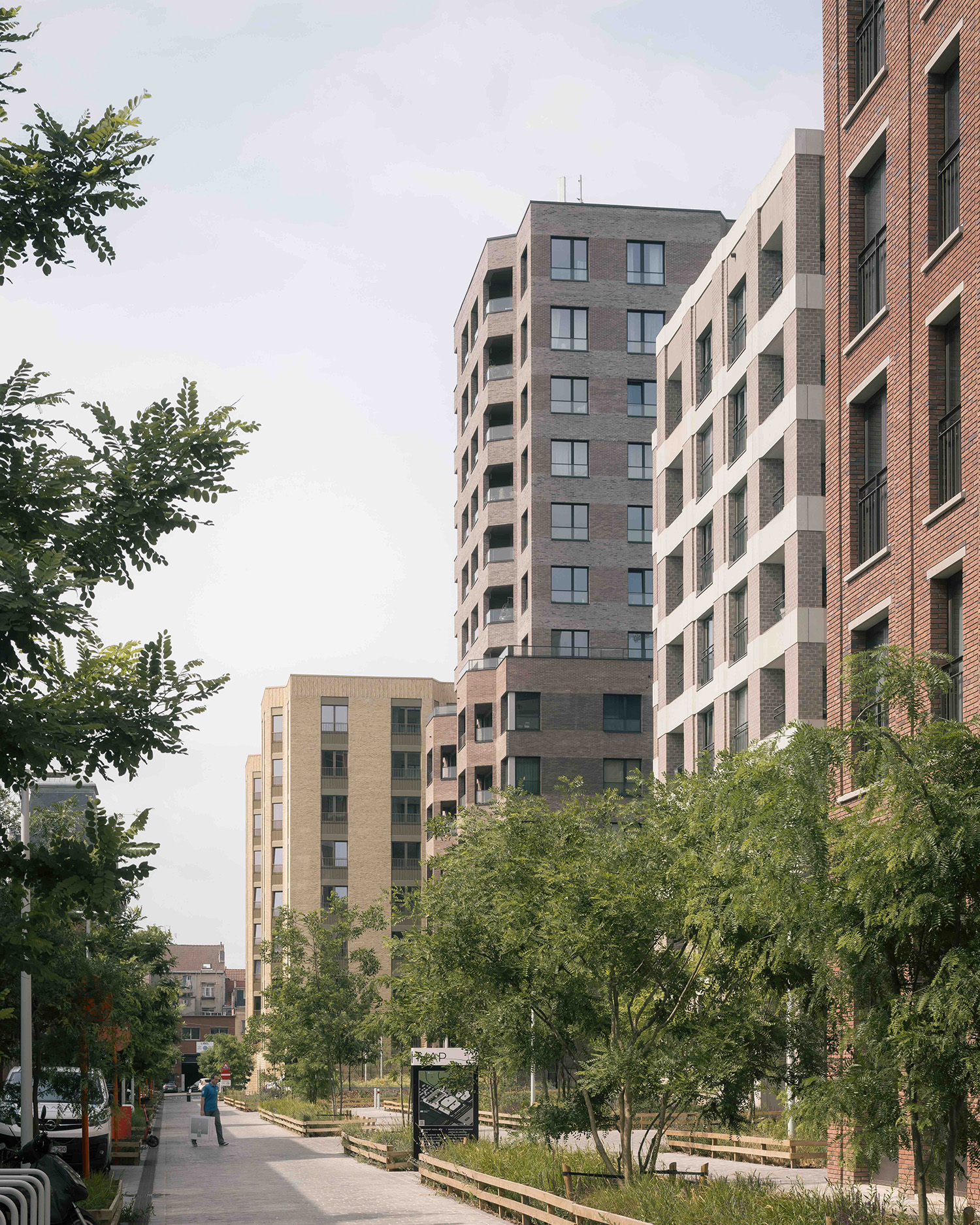
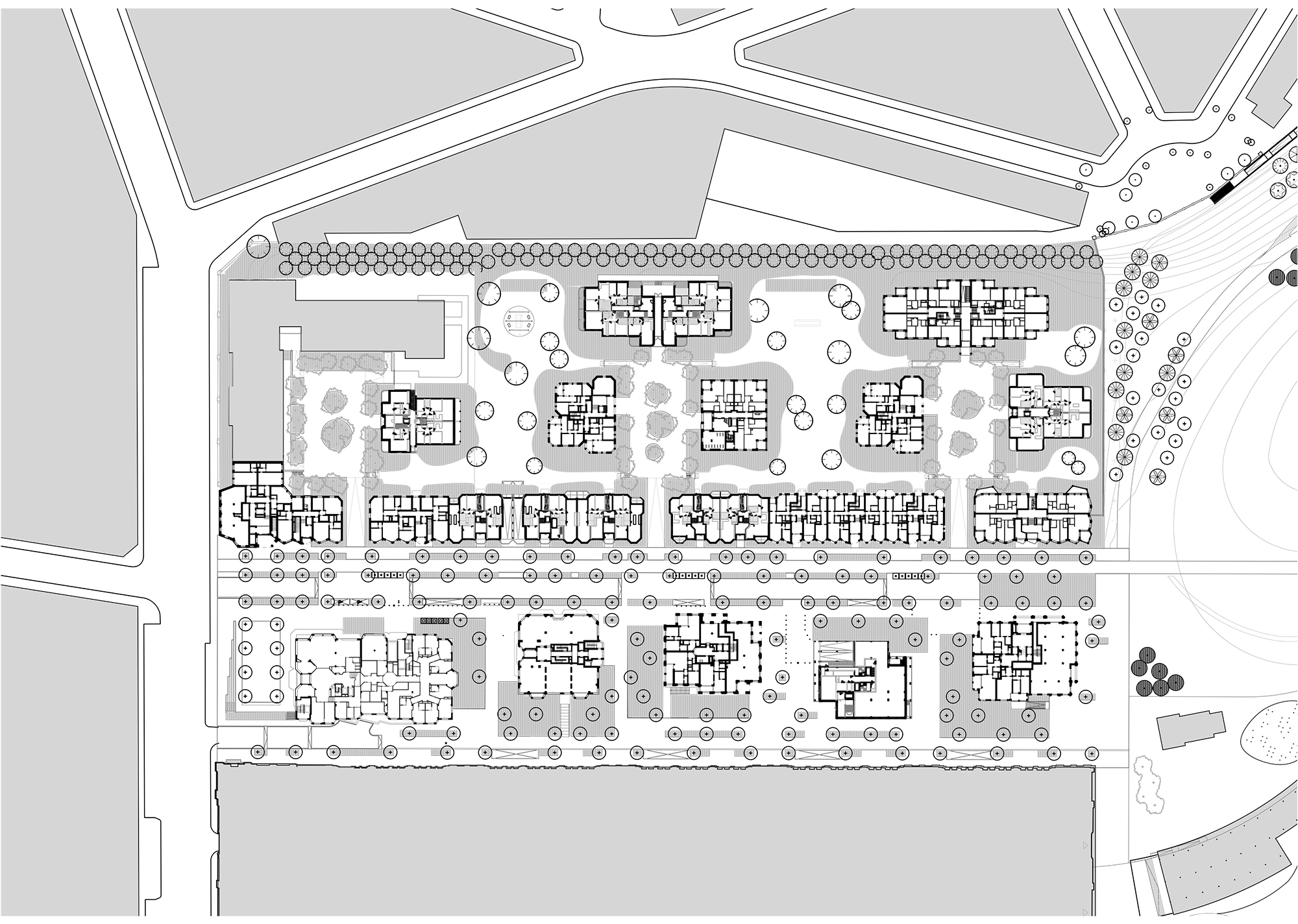
Three spatial movements between city and park—the urban square at the Gare Maritime, the central avenue (the ‘Dreef’), and the city gardens—defined the design of the public realm. Together, they create cohesion among the buildings, each with its own character yet sharing a common architectural language. The new residential area is porous and fully accessible, allowing everyone to move freely through it. The 70-metre-wide Dreef forms the backbone of the neighbourhood, connecting it directly to the park. At its end, aligned with the Picardstraat, the residential care centre is set back to define a square with a bus stop and, among the trees, a pétanque court—an informal meeting place for residents and neighbours alike.
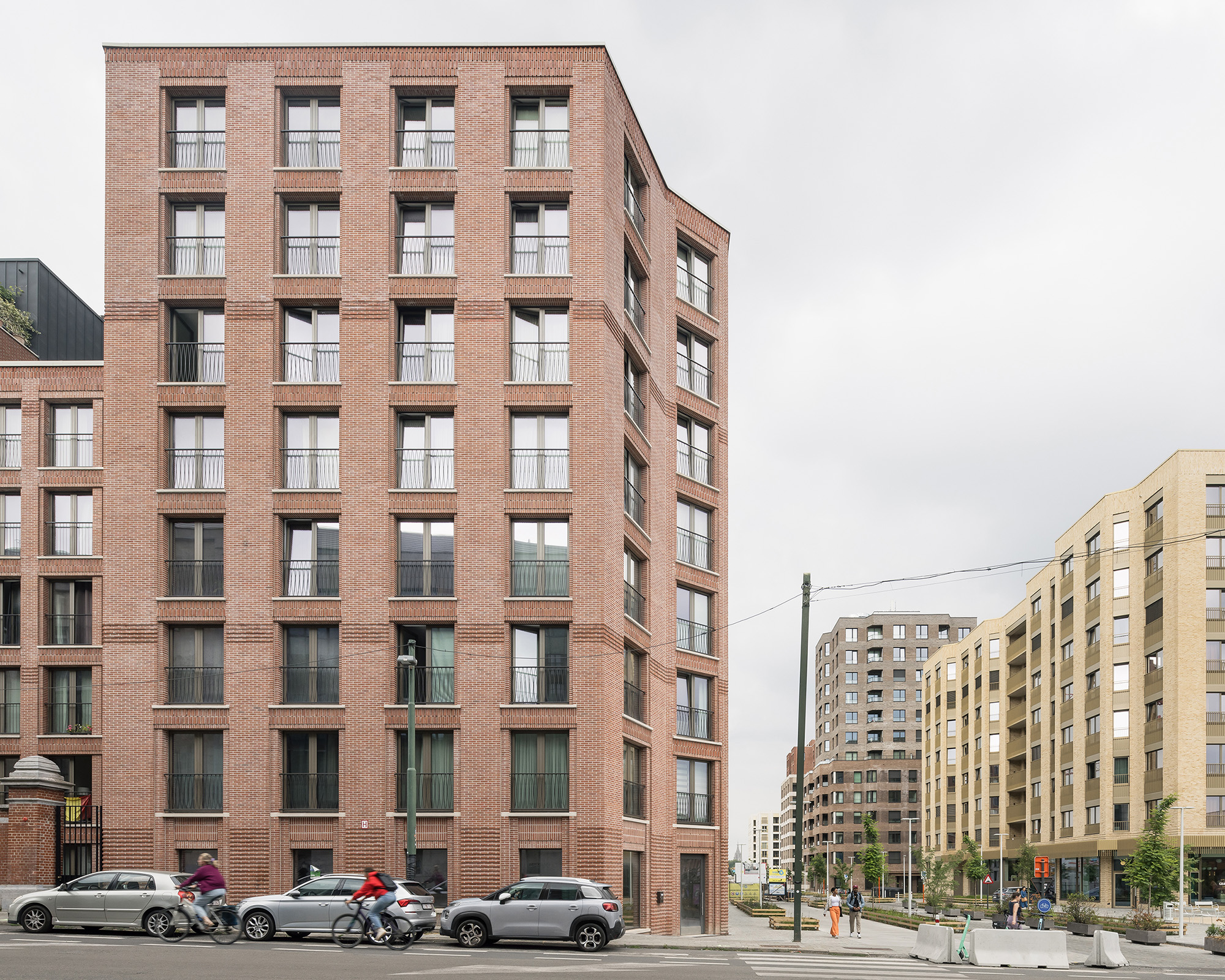
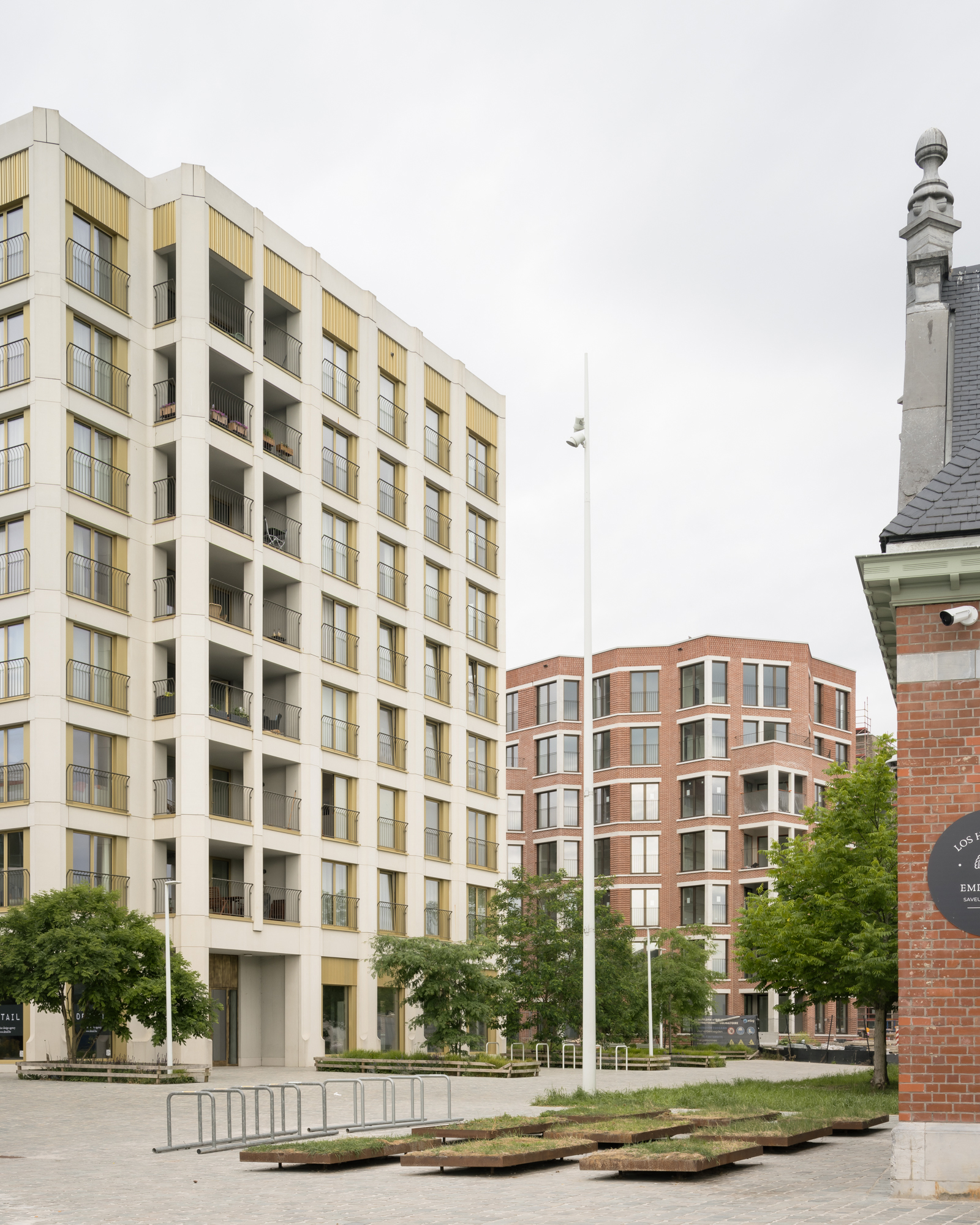
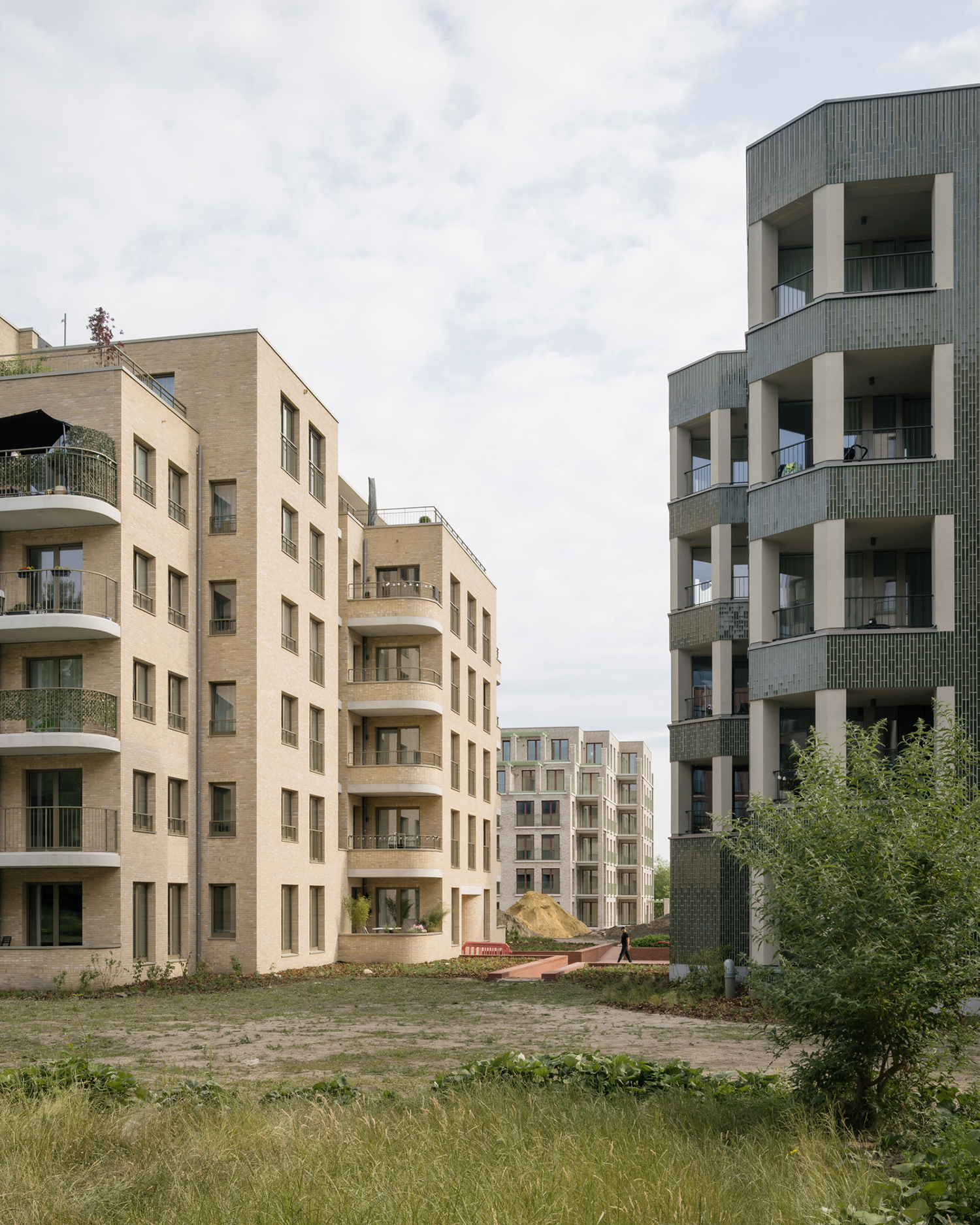
Along the Dreef, five residential buildings of eight to twelve storeys were completed during the first phase, positioned as ‘solitaires’ within the urban landscape. In the second phase, the western side of the site was developed. Openings lead to three squares framed by urban villas that open onto communal gardens. Soft corners, covered loggias, and entrance porticos lend these five- and six-storey villas a modest character. Brick serves as the unifying material, anchoring the new buildings within the architectural identity of Tour & Taxis.
All buildings meet Passivhaus standards for energy use and airtightness, with the limited heating demand supplied through shared boiler rooms. Green spaces between the buildings provide cooling and maximise rainwater infiltration. Each building includes rainwater reservoirs for reuse, with surplus water during extreme rainfall directed to a wadi in the park.